
TABLE OF CONTENTS
Week 1: (Dis)ability
Before you begin Week 1: Crip Camp Reflections
Introduction to (Dis)ability
(Dis)ability Studies and the DisCrit Movement
The History of Special Education
Special Education Laws
Conclusion and References
Week 1 Assignment and Knowledge check
Week 2: IDEA
Before you begin Week 2: Including Samuel
IDEA and The Six Core Principles
IDEA in the Music Classroom: IDEA 1 & 2
IDEA in the Music Classroom: IDEA 3 & 4
IDEA in the Music Classroom: IDEA 5 & 6
Models of (Dis)ability
Conclusion and References
Week 2 Assignment and Knoweledge check
Week 3: Differentiated Instruction (DI) and Strength-Based Pedagogy (SBP)
Differentiated Instruction
Strength-Based Pedagogy
Conclusion and References
Week 3 Assignment and Knowledge check
Week 4: Neurodiversity and Specific Learning (Dis)abilities (SLD)
Neurodiversity
Specific Learning (Dis)abilities
Dyslexia and Dyscalculia
Dysgraphia and Dyspraxia
Conclusion and References
iscussion: Specific Learning (Dis)abilities
Week 4 Knowledge Check
Week 5: Neurodiversity: ADHD, Universal Design for Learning (UDL)
Neurodiversity: Attention Deficit Hyperactivity Disorder (ADHD)
Strength-Based Approaches for ADHD
Universal Design for Learning (UDL)
Thinking Beyond UDL
Conclusion and References
Week 5 Assignment and Knowledge check
Week 6: Neurodiversity: Autism Spectrum Disorder (ASD); The Syndromes
Autism Spectrum Disorder (ASD)
Strength-Based Approaches for ASD
The Non-Speaking Student with ASD
Common Syndromes in the Music Classroom
Conclusion and References
Week 6 Assignment and Knowledge check
Week 7: Intellectual (Dis)ability; Individualized Education Program (IEP)
What is Intellectual (Dis)ability?
Teaching Students with Intellectual (Dis)abilities
Self-Contained Settings vs Inclusive Music Settings
The Individualized Education Program (IEP)
Conclusion and References
Week 7 Assignment and Knowledge check
Week 8: Emotional and Behavioral Disorders (EBD)
Classroom Management Reframed
Understanding Emotional and Behavioral Disorders
Behavior Systems, Rewards, and the Hidden Curriculum
Building Trust with EBD Students
UDL for EBD
Conclusion and References
Week 8 Assignment and Knowledge check
Week 9: Communication Disorders and Deaf/Hard-of-Hearing
Communication Disorders
Deaf, Hard-of-Hearing, and Hearing Loss
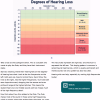
The Audiogram and The Speech Banana
Cochlear Implants and Hearing Aids
Conclusion and References
Week 9 Assignment and Knowledge check
Week 10: Blindness/Low Vision; Dream UDL Classroom Project
Blindness and Low Vision
Braille
Introducing Your Dream UDL Classroom
UDL Lesson Plan in Actionds
UDL Curriculum
UDL Classroom Project
Conclusion and References
Week 10 Assignment and Knowledge check
Week 11: Physical (Dis)abilities
Common Physical (Dis)abilities
The Henry Viscardi School
Teaching Children with Physical (Dis)abilities
Adapted Instruments and Materials
Physical (Dis)abilities Perspective
Conclusion and References
Week 11 Assignment and Knowledge check
Week 12: Assistive Music Technology; Gifted Students
Assistive Music Technology
Gifted Students
Gifted Students: Shane
Conclusion and References
Week 12 Assignment and Knowledge check
Week 13: Course Conclusion; UDL Dream Classroom Preparation
Course Conclusion
UDL Dream Classroom Preparation
Week 14 and Week 15: UDL Dream Classroom - Final Presentations
UDL Dream Classroom - Final Presentation
Description
Integrated Resources
ISBN
Special Music Education, authored by Dr. Kimberly McCord, explores how to teach music to students with (dis)abilities and gifted learners. The course is based on three proven approaches: Differentiated Instruction, Strength-Based Pedagogy, and Universal Design for Learning (UDL). It helps future music and special educators create inclusive, accessible classrooms for everyone. This course covers special education history, ways to understand disability, special education law (IDEA), types of disabilities, including neurodiversity and twice-exceptional learners, co-teaching methods, and both general and music-specific assistive technology.
Read Full Description
Academically rigorous, yet accessible and engaging, Special Music Education is a complete music textbook, and gives you the most music for your online, hybrid, or face-to-face music course. Everything you need for your course is included. No downloads or extra resources necessary.
Written Assignments: Written assignments throughout the course ask students to apply what they've learned directly to real classroom scenarios and draw on the week's content and readings to practice decision-making relevant to music and special education.
Knowledge Checks: Short, graded quizzes at the end of each week. Questions are scenario-based and ask students to apply that week's content to real classroom situations.
Capstone Project: Includes a capstone project that requires students to design an inclusive music classroom based on UDL principles. Students sketch their classroom, plan for accessibility and differentiated instruction, and present their design in a format of their choice.
Discussion Forums: Several discussion forums in the course encourage students to reflect and exchange perspectives with peers. Two of these forums focus on documentary viewings.
Reflect Prompts: "Reflect" questions throughout the course prompt students to relate course content to their future classrooms.
Downloadable Worksheets & Aids: Downloadable worksheets and aids give students practical tools they can keep and use once they're teaching.
Images and Videos: The course includes original images and videos from Dr. Kimberly McCord, along with selected YouTube content, to illustrate real examples related to each week's topics.
Listen to Lecture – Text is narrated for online listening.
Special Music Education
ISBN:979-8-9904899-5-0.